Showing posts with label fun laughter. Show all posts

Sunday, May 1, 2011

Teenage Car Thiefs Get BIG shock!


TEENAGE thieves targeting vans parked on a council estate forced open the doors of one - and were confronted by four SAS men on a stakeout.

Two of the Who Dares Wins heroes stayed put while the other two chased the panic-stricken tearaways and gave them "a bit of a slap".

The SAS surveillanced team was on a night-time counter-terrorism training exercise in Manchester.

A source said: "The lads each had a machine gun and a side pistol with live ammunition to make it realistic. They saw these scrotes coming for some time.

"They were trying their luck on every van in the estate, looking for tools they could pinch.

"One of the team was resting, one on standby, one log-keeping and monitoring the radio, and the fourth was watching the practice target through the scope of a sniper rifle.

Heroes ... SAS crest
"They didn't want to move for fear of ruining the exercise and hoped the gang would pass them by.

"The lads decided they would teach them a lesson if they did get into their van, which is exactly what happened.

"To this day, those idiots probably still don't have any idea who they were messing with - but it hopefully made them think twice about doing that to anyone else again."


With the team's cover blown, the exercise was cancelled. But no official report was made to police to prevent members having to give court evidence.

The incident was confirmed by senior defence forces. But The Sun has been asked not to reveal specific details.

ABOUT The Special Air Srvice:

The Special Air Service (SAS) is the principal special forces organisation of the British Army. Formed in 1941 to conduct raids behind German lines in North Africa, with the Long Range Desert Group, it today serves as a model for similar units fielded by many other countries.

The SAS is a small and secretive organisation, but attracts a disproportionate amount of media coverage. It forms part of the United Kingdom Special Forces, alongside the Special Boat Service (SBS) and the Special Reconnaissance Regiment (SRR).

The SAS is widely regarded as one of the finest and best trained special forces units in the world.

Barry Eva (Storyheart)

My Blogs:

Book Information and Things UK - Across the Pond

Book and a Chat Radio Show Guests - A Book and a Chat

Funny, Weird Or Just Interesting News From Around the World - Laugh I Thought My Trousers Would Never dry

Thursday, April 22, 2010

From Victoria Cross to Wyatt Earp

Today sees two historic peices of weird news.

The first Victoria Cross to be won by a British army soldier - along with the cannonball which blew off his arm - has fetched £252,000 at auction.

The medal, which is Britain's highest military award for valour, was given to Glasgow-born Major John Simpson Knox.

It was for acts of heroism between 1854 and 1855 during the Crimean War.

The medal and cannonball, which took off part of Major Knox's left arm, went under the hammer at Spink Auctioneers in London.

A fellow soldier had picked up the missile that hit Major Knox and later gave it to him.

Major Knox, who was born in 1828, ran away from home in Glasgow at 14 and illegally joined the Scots Fusilier Guards as he was under age.

By the time the Crimean War had begun in 1854 he was an acting sergeant major.
He performed the first of two acts of valour on 20 September 1854 during the Battle of the River Alma.

According to the citation for his medal, he "acted with conspicuous courage in reforming the ranks of the Guards at a decisive moment of the action".

The second act of valour occurred in June the following year.

Then, while serving as a lieutenant with the Rifle Brigade, he volunteered for an attack on heavily defended Russian positions at Sebastopol.

According to the citation: "He remained in the field until he was twice wounded, all the time acting with great gallantry."

It was during that attack, on a fortress defending the city of Sebastopol, that Major Knox was struck on the left arm by the cannonball.

After his retirement from the Army in 1872, he took up residence at Cheltenham where he died on 8 January 1897 and was buried in the town's cemetery.

Before the auction, medal expert Oliver Pepys, of Spink auctioneers, said: "Major Knox showed incredible bravery, losing his arm to cannon fire in the process.

"The medal is being sold with a Russian cannonball, the very one that smashed into Knox's arm. In all my years of working with rare medals and war artefacts I have never seen a more unusual keepsake."

Victoria Cross medals are still cast from bronze taken from cannons captured from the Russians at Sebastopol.

The VC was being sold along with three other medals he was awarded - the Crimea Medal, the French Legion of Honour and the Turkish Crimea Medal.


OK Corral documents discovered in court storeroom

Records from an inquest into the notorious 1881 shootout at the OK Corral in Tombstone, Arizona, have been discovered in a court storeroom.

The scrawled notes are a transcript of a witness statement about the shootout between lawmen including Wyatt Earp and three outlaws, who were killed.


The documents were last seen about 1960 when they were photocopied.

Researchers hope that restoration by archivists will reveal margin notes not visible on the reproductions.

But the notes are unlikely to shed much new light on the incident, as researchers already had access to the copies.

The pages will soon be digitised and made available online to researchers and Wild West history buffs.

Thirty-second firefight

The yellowed pages, said to be as brittle as potato crisps, were discovered in a manila envelope by court staff assigned to clean out a storage room at Cochise County superior court in Bisbee, Arizona, about 23 miles (37km) south of Tombstone, the Arizona Daily Star newspaper reported.

On 26 October, 1881, Wyatt, Virgil and Morgan Earp and Doc Holliday confronted Ike and Billy Clanton and Frank and Tom McLaury behind the OK Corral.

The McLaurys and Billy Clanton were killed in the ensuing 30-second firefight. The incident and subsequent investigation were covered heavily in the news media at the time.

The fight entered the folklore of the Wild West and made heroes of the Earps. It has been portrayed numerous times in film and in literature.

Nearly 130 years after the shootout, it remains unclear which party fired first and whether all of the outlaws were armed.

The Earps and Holliday said they were defending themselves, but supporters of the dead men said they were murdered.

The document appears to include testimony by William Claiborn, who a historian identified as a friend of the three dead men, according to the Associated Press news agency.

It was recorded as part of an inquiry by a local official into the shootout.

The document indicates that Doc Holliday was carrying a weapon concealed under a long coat.

The town of Tombstone celebrates its part in Wild West history, attracting tourists with re-enactments of the gun battle.

Earlier this month Arizona Governor Jan Brewer, a Republican, signed into law a measure allowing Arizonans to carry concealed firearms without a permit.


Barry Eva (Storyheart)

My Blogs:
Book Information and Things UK - Across the Pond
Book and a Chat Radio Show Guests - A Book and a Chat
Funny, Weird Or Just Interesting News From Around the World - Laugh I Thought My Trousers Would Never dry

Wednesday, March 31, 2010

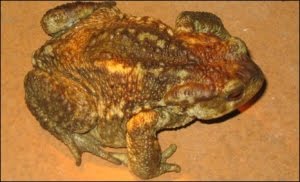
Follow That Toad

If you see the toads leaving, run for the hills.

The Common toads appear to be able to sense an impending earthquake and will flee their colony days before the seismic activity strikes.The evidence comes from a population of toads which left their breeding colony three days before an earthquake that struck L'Aquila in Italy in 2009.

How toads sensed the quake is unclear, but most breeding pairs and males fled.

They reacted despite the colony being 74km from the quake's epicenter, say biologists in the Journal of Zoology.

It is hard to objectively and quantifiably study how animals respond to seismic activity, in part because earthquakes are rare and unpredictable.

Some studies have been done on how domestic animals respond, but measuring the response of wild animals is more difficult.

Even those that have been shown to react, such as fish, rodents and snakes tend to do so shortly before an earthquakes strikes, rather than days ahead of the event.

However, biologist Dr Rachel Grant of the Open University, in Milton Keynes, UK, was routinely studying the behavior of various colonies of common toads on a daily basis in Italy around the time a massive earthquake struck.

Her studies included a 29-day period gathering data before, during and after the earthquake that hit Italy on 6 April 2009.

The quake, a 6.3-magnitude event, struck close to L'Aquila city, about 95km (60 miles) north-east of Rome.

Dr Grant was studying toads 74km away in San Ruffino Lake in central Italy, when she recorded the toads behaving oddly.

Five days before the earthquake, the number of male common toads in the breeding colony fell by 96%.

AMPHIBIAN PHENOMENA

Common frogs (Rana temporaria) mating
Dr Grant has also shown that many amphibians around the world synchronize their mating activity by the full Moon, a phenomenon not reported before
The world's first truly monogamous amphibian was described earlier this year
Listen to a common toad croaking

That is highly unusual for male toads: once they have bred, they normally remain active in large numbers at breeding sites until spawning has finished.

Yet spawning had barely begun at the San Ruffino Lake site before the earthquake struck.

Also, no weather event could be linked to the toads' disappearance.

Three days before the earthquake, the number of breeding pairs also suddenly dropped to zero.

While spawn was found at the site up to six days before the earthquake, and again six days after it, no spawn was laid during the so-called earthquake period - the time from the first main shock to the last aftershock.

"Our study is one of the first to document animal behavior before, during and after an earthquake," says Dr Grant.

She believes the toads fled to higher ground, possibly where they would be at less risk from rock falls, landslides and flooding.

Exactly how the toads sense impending seismic activity is unclear.

The shift in the toads' behaviour coincided with disruptions in the ionosphere, the uppermost electromagnetic layer of the earth's atmosphere, which researchers detected around the time of the L'Aquila quake using a technique known as very low frequency (VLF) radio sounding.

ITALIAN EARTHQUAKE

Use this map to explore coverage of the Italian earthquake in video, audio, pictures and text
After the quake, L'Aquila was described as a 'broken city'
Read 'A history of deadly earthquakes'

Such changes to the atmosphere have in turn been linked by some scientists to the release of radon gas, or gravity waves, prior to an earthquake.

In the case of the L'Aquila quake, Dr Grant could not determine what caused the disruptions in the ionosphere.

However, her findings do suggest that the toads can detect something.

"Our findings suggest that toads are able to detect pre-seismic cues such as the release of gases and charged particles, and use these as a form of earthquake early warning system," she says.

Ants ignore quakes

One other study has quantified an animal's response to a major earthquake.

Researchers had the serendipitous opportunity to measure how the behavior of the desert harvester ant (Messor pergandei) changed as the ground began to tremble in the Mojave Desert, California, on 28 June 1992.

The largest quake to hit the US in four decades struck during the middle of an ongoing study, which measured how many ants walked the trails to and from the colony, the distributions of worker ants and even how much carbon dioxide the ants produced.

However, in response to that 7.4 magnitude quake, the ants did not appear to alter their behavior at all.


Barry Eva (Storyheart)

My Blogs:
Book Information and Things UK - Across the Pond
Book and a Chat Radio Show Guests - A Book and a Chat
Funny, Weird Or Just Interesting News From Around the World - Laugh I Thought My Trousers Would Never dry

Sunday, March 21, 2010

A Sign of the Times


A most people know who live in Great Britain there is a railway station in Wales which whose name is the longest word in the British language. Llanfairpwllgwyngyllgogerychwyrndrobwllllantysiliogogogoch, is a Victorian composition primarily for the benefit of tourists, for the station serving the village of Llanfairpwll on the North Wales Coast Line from London Euston station to Holyhead.

This week however the Welsh language again caused a few issues.

When officials asked for the Welsh translation of a road sign, they thought the reply was what they needed. Unfortunately, the e-mail response to Swansea council said in Welsh: "I am not in the office at the moment. Send any work to be translated".So that was what went up under the English version which barred lorries from a road near a supermarket.

"When they're proofing signs, they should really use someone who speaks Welsh," said journalist Dylan Iorwerth. Swansea Council became lost in translation when it was looking to halt heavy goods vehicles using a road near an Asda store in the Morriston area

All official road signs in Wales are bilingual, so the local authority e-mailed its in-house translation service for the Welsh version of: "No entry for heavy goods vehicles. Residential site only".

The reply duly came back and officials set the wheels in motion to create the large sign in both languages.The notice went up and all seemed well - until Welsh speakers began pointing out the embarrassing error.

This is not ehe only time Welsh has been translated incorrectly or put in the wrong place:

Cyclists between Cardiff and Penarth in 2006 were left confused by a bilingual road sign telling them they had problems with an "inflamed bladder".

• In the same year, a sign for pedestrians in Cardiff reading 'Look Right' in English read 'Look Left' in Welsh.

• In 2006, a shared-faith school in Wrexham removed a sign which translated the Welsh for staff as "wooden stave".

• Football fans at a FA Cup tie between Oldham and Chasetown - two English teams - in 2005 were left scratching their heads after a Welsh-language hoarding was put up along the pitch. It should have gone to a match in Merthyr Tydfil.

• People living near an Aberdeenshire (Scotland) building site in 2006 were mystified when a sign apologising for the inconvenience was written in Welsh as well as English.


Barry Eva (Storyheart)

Wednesday, March 17, 2010

Stoned Wallabies Creating Crop Circles


Australian wallabies are eating opium poppies and creating crop circles as they hop around "as high as a kite", a government official has said.

The attorney general for the island state of Tasmania, said the kangaroo-like marsupials were getting into poppy fields grown for medicine.

She was reporting to a parliamentary hearing on security for poppy crops.

Australia supplies about 50% of the world's legally-grown opium used to make morphine and other painkillers.

"The one interesting bit that I found recently in one of my briefs on the poppy industry was that we have a problem with wallabies entering poppy fields, getting as high as a kite and going around in circles," the hearing was told. "Then they crash, and we see crop circles in the poppy industry from wallabies that are high."

Rick Rockliff, a spokesman for poppy producer Tasmanian Alkaloids, said the wallaby incursions were not very common, but other animals had also been spotted in the poppy fields acting unusually.

"There have been many stories about sheep that have eaten some of the poppies after harvesting and they all walk around in circles," he added.

Retired Tasmanian poppy farmer Lyndley Chopping also said he had seen strange behaviour from wallabies in his fields.

"They would just come and eat some poppies and they would go away," he told ABC News.

"They'd come back again and they would do their circle work in the paddock."

Some people believe the mysterious circles that appear in fields in a number of countries are created by aliens. Others put them down to a human hoax.


Of course this brought in a huge load of comments, here's a few of the better ones...

I have seen a stoned wallaby but I don't know about them making crop circles. The one I saw was slurring his words and asking me for a dollar as he was trying to get the boat to see his brother in New Zealand - he looked in no mood to be formulating a series of complex agricultural design patterns


Funniest headline of the year so far. Trippy Skippy.

And my favorite...

I saw a whole bunch of them dingos going mad in my corn field only last night. I'm not sure if they were high or not but I'm pretty sure they were. One of them had a ghettoblaster and they were listening to some kind of fast electronic music.


Barry Eva (Storyheart)

 
Copyright © 2010 Laugh I Thought My Trousers Would Never Dry. All rights reserved.
Blogger Template by